Announcement, WWR
Travis Murao Announces Retirement From International Wheelchair Rugby
October 1, 2026After two decades representing Canada on the world stage, Travis Murao is retiring from international wheelchair rugby.
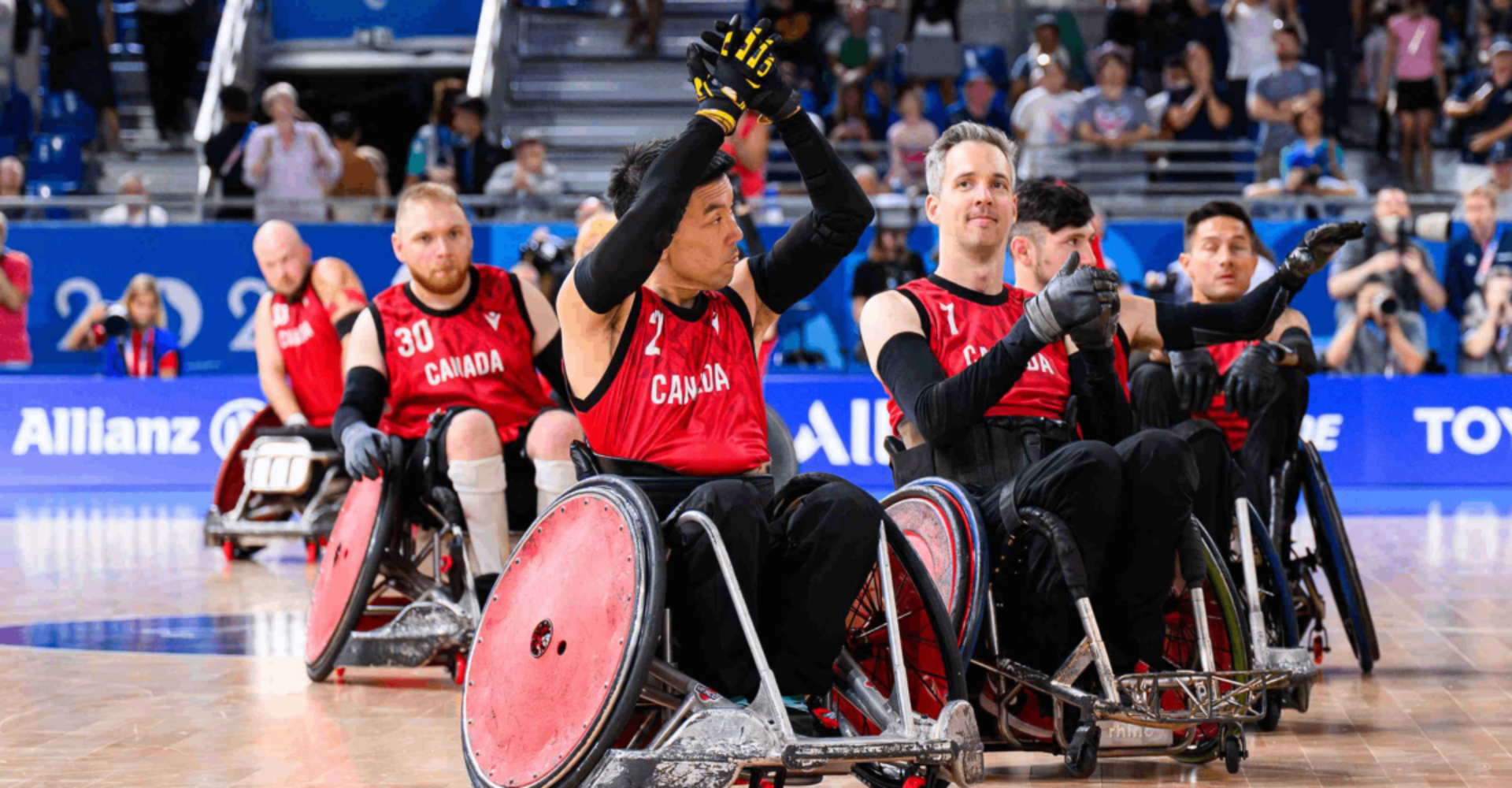
After two decades representing Canada on the world stage, Travis Murao is retiring from international wheelchair rugby.
The Toronto-based, 2.0-classified athlete leaves the national team with four Paralympic Games appearances, a Paralympic silver medal, a Parapan American Games gold medal, and three additional Parapan American Games podium finishes, along with two World Championship medals.
Murao was introduced to the sport at G.F. Strong Rehabilitation Hospital in Vancouver, B.C., following his injury. The man who introduced him was none other than Duncan Campbell, one of wheelchair rugby’s founders and, like Murao, a 2.0-classified player.
“I kind of tried to copy everything he did, and he was the first player on the court that I was really trying to catch and really trying to beat in drills,” Murao recalled.
“I owe so much to Duncan and what he’s created in wheelchair rugby and the legacy he’s built,” Murao said. “It’s not just that it’s an amazing sport that’s played all over the world, but thousands and thousands of quadriplegics are living such a higher quality of life because of how active they are and the travel they get to do, and it’s all because of him.”
When Murao reflects on his career, the results aren’t what come to mind first.
“We’re always chasing those medals, but they end up in a backpack in your closet,” Murao said. “When I look back, really what makes me feel good about myself is the athletes who I have taken the time to help out.”
Murao earned his first spot on the national team in 2006 and went on to compete alongside and against many of the sport’s best athletes. His first Paralympic Games, in London in 2012, remain particularly meaningful.
“My first Games will always hold a special place in my heart,” he said. “We won a silver medal there. The Games in London were incredible, fantastically organized, and the people in the UK really got behind it. It was my first big multi-sport Games, so heading into the dining hall for the first time and seeing all the athletes from all over the world, with all different disabilities, was really, really cool.”
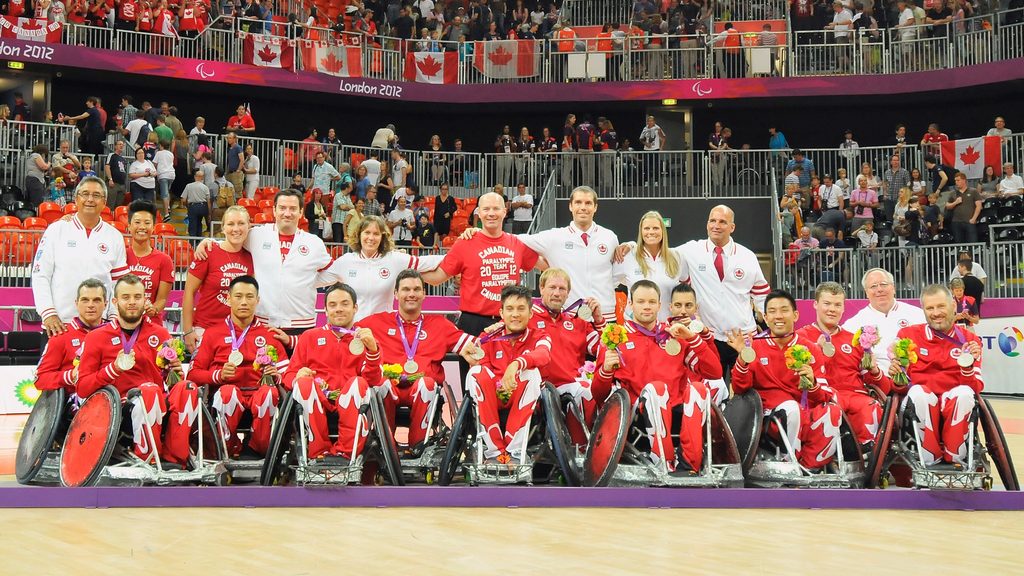
Murao went on to compete at three more Paralympic Games and four Parapan American Games, winning gold in Toronto in 2015 and silver in 2019 and 2023. He also helped Canada win World Championship silver in 2014 and competed at the 2006, 2010, 2018, 2022 and 2026 World Championships.
Throughout it all, Murao built a reputation as one of the team’s steadying forces, the kind of leader who shaped culture, kept teammates connected, and brought out the best in those around him.
“I always knew my spot on the team, especially early on. I was not one of the stronger players, so I had more of a bench role, but I also knew I could contribute from there,” he said.
That instinct for leadership only grew stronger over time, as Murao evolved from a young athlete learning from veteran leaders into one that younger players now turn to for advice.
“It’s funny having the young athletes come up to me with the same questions I had back then,” he said. “It feels great to be able to give back in the same way that people helped me out.”
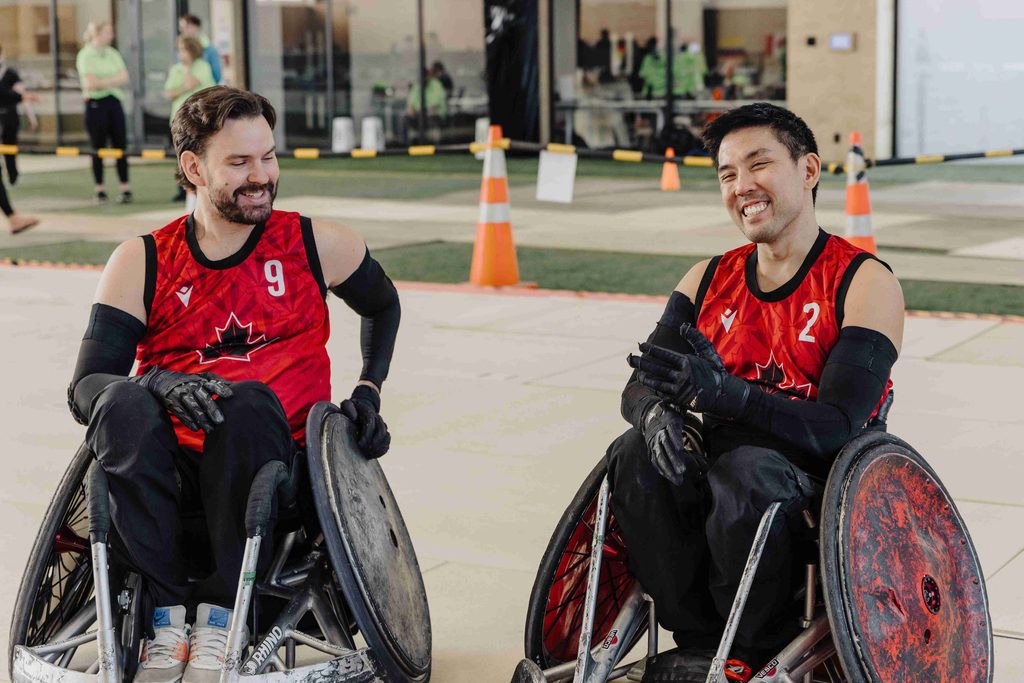
That sense of giving back will continue beyond Murao’s playing career. He has long been active in the wheelchair rugby community as a coach, including with Ontario’s provincial team and Canada’s women’s national development program, an interest that took root after he was thrown into a player-coach role in his first year on the national team, and grew further through a national-team coach education program in 2013.
As his role in coaching grew, Murao had been considering retirement from international play for some time but wanted to leave the national team at a point when the program was in a strong position, and its next generation was ready for greater responsibility.
“I really wanted to end on a positive note and for the team to be in a good place,” he said. “After World Championships, we ended on a high note, but it really felt like the right moment. The young guys are really showing they’re capable and ready to step up into a bigger role on the team.”
One of those athletes is fellow 2.0 player Reese Ketler. Murao, who was introduced to wheelchair rugby by Manitoba player Duncan Campbell, spending years chasing him in sprint drills, saw a familiar pattern emerge over recent years as Ketler began to chase him in those same drills.
“It felt like a nice passing of the torch, where I could see my spot filled by another Manitoba guy from where it all started,” Murao said.
For Murao, it’s about more than speed on the court. He has watched Ketler embrace his role within the team and use his platform for good.
“To see how he’s taken to his role in the team, and in his social media presence, he’s really shown what a two-pointer can do… But also the life that they can live. Reese does some really cool things, and he’s never afraid of an adventure.” Murao said. “Looking at the future, knowing that it’s in good hands and that it’s headed in a great place is really cool”.
Over his two decades representing Canada, Murao has watched the team evolve through multiple generations, with the lessons and experience of veteran athletes continuing to be passed down.
“When I first came on the team, there was such a strong veteran leadership group that I really got a crash course on everything wheelchair rugby,” he said. “It was such a gift to be able to have so much experience and so many guys willing to share their knowledge”.
Now Murao is one of those veterans, his knowledge set to keep being passed on, just in a different role. While he’s looking forward to giving his body time to recover and spending more time at home, he has no plans to leave the sport community that has shaped so much of his life. Murao will remain part of the community, helping the next generation.
Looking back, he said the biggest lesson wheelchair rugby has taught him is to appreciate the journey.
“I was always chasing the gold medal, and I always wanted to win, and we got so close so many times,” he said. “But looking back, it’s really been about the trip there. So many memories we made, the relationships we’ve built, the adventures we’ve had.”
That sense of shared history extends to Trevor Hirschfield, who came onto the national team alongside Murao and in 2025 shifted into the role of National Team Head Coach.
“Trevor obviously started at the same time as me. We shared our entire career together,” Murao said. “So, you know, it’s pretty cool to be able to look back and have 20 years travelling around the world with one of your best buds, and all the adventures and memories we’ve shared over the years have been really cool.”
Murao is quick to point out that none of it was accomplished alone. From the veteran leaders who mentored him as a rookie, to the coaches who shaped his game, to the teammates he shared locker rooms and trips with, he credits the people around him as much as anything for the career he built.
Related Articles